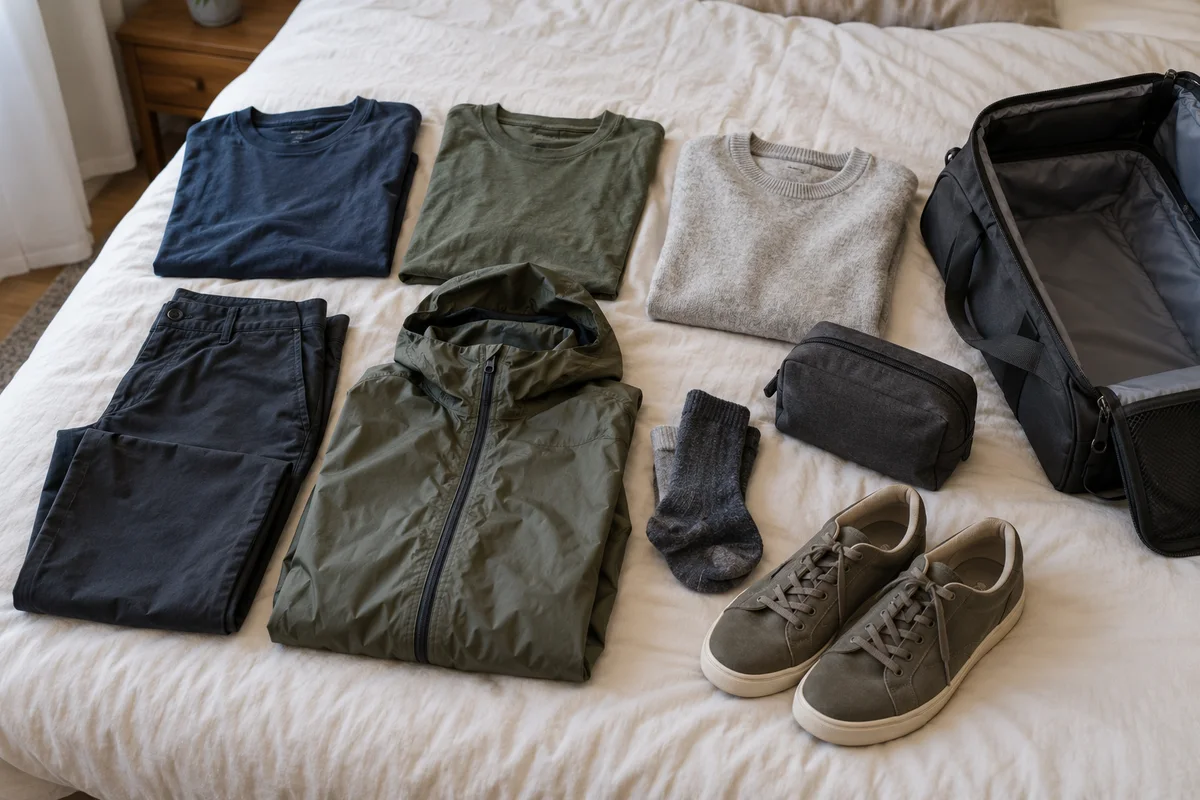
Choose a small set of clothes for my actual working week
Use your own laid-out clothes and real schedule to find combinations without starting with a shopping list.
AI-generated example input. Confirm your actual clothes and bag measurements; the image does not prove everything fits. How to use your own photo →
Use my labelled wardrobe photos to plan clothes for my working week [schedule, dress code and checked weather]. First list the visible garments and ask me to confirm colours, quantities, comfort and anything unclear. Do not infer fabric, fit or warmth from appearance. Use only confirmed items to propose outfits for each day, accounting for laundry and whether I walk or cycle. Keep optional shopping suggestions separate and explain the specific gap each would fill. Do not infer body measurements, identity or what I should wear based on gender. Explain which items are reused and what needs trying on before I choose.
Fill in your details before copying
Make it yours: This example photo is a small starting selection, not a complete work wardrobe. Upload your own clothes, label similar items and add shoes or layers that are outside the frame.
A useful follow-up
Wednesday is wet and includes a client meeting. Change only that day's outfit using confirmed items. If nothing meets the requirements, say what is missing rather than inventing a coat I own.
02
Text
Choose an outfit that works for both the ceremony and the evening journey home
An all-day outfit plan with a practical return journey.
I have [event and supplied dress code], travel [details], expected conditions [verified forecast or unknown] and these clothes [inventory]. Make two outfit plans using what I own, including shoes, a layer and a compact change if needed. Separate dress-code interpretation from facts in the invitation. Do not infer body size, buy items for me or invent weather. Explain comfort and packing trade-offs for standing, sitting and returning home. Ask which part of the day is hardest to dress for and keep uncertain venue expectations as host questions.
Fill in your details before copying
Make it yours: Include real travel and movement needs, not only a desired look.
A useful follow-up
The venue confirms outdoor standing for an hour. Adjust the layer and footwear plan using my existing items.
03
Text
Borrow an outfit for an event without losing track of what must be returned
An event outfit plan with a clear borrowed-item return record.
I am borrowing these clothes and accessories [inventory] for [event]. The owners' actual conditions are [care, collection and return details], my schedule [dates] and items I already own [list]. Make an outfit checklist and a private loan tracker with condition notes, confirmed care instructions and return reminders. Do not invent cleaning methods, assume permission to alter anything or infer damage from a poor photo. Ask which return arrangement still needs agreement. Keep contact and address details out of any shared outfit plan.
Fill in your details before copying
Make it yours: Ask the owner before cleaning or altering borrowed garments.
A useful follow-up
One item is no longer available. Revise the outfit using my own clothes and remove its unnecessary return task.
04
Text
Organise a clothing swap with clear sizes, condition notes and unclaimed-item rules
A practical clothing-swap plan with honest item descriptions.
We want a clothing swap for [group] with [time and space]. Here are the items people have explicitly offered [descriptions], label sizes [labels], known condition [notes] and agreed event rules [rules]. Make a simple item card and fair browsing plan, separating label size from measured dimensions. Do not judge bodies, invent fabric or imply cleaning guarantees. Keep unconfirmed donations separate and ask what happens to unclaimed items before drafting the invitation. No item should be given away without the owner's agreement.
Fill in your details before copying
Make it yours: Agree the fate of unclaimed clothes in advance; bringing an item need not mean donating it permanently.
A useful follow-up
One owner wants an unclaimed coat back. Update its card and collection task without changing everyone else's agreement.
05
Text
Choose a video-interview outfit using a real camera test instead of generic style rules
Two practical outfit options and an actual camera-rehearsal checklist.
I have a video interview for [role], actual employer dress guidance [text or unknown], these clothes [inventory] and this camera setup [description or authorised photo]. Suggest two options from what I own and a short camera rehearsal to check framing, visible patterns, comfort and background separation. Do not judge my body, invent company expectations or guarantee an interview outcome. Keep technical camera observations separate from personal style preferences. Ask which outfit feels natural when I sit and speak before recommending a choice.
Fill in your details before copying
Make it yours: Test in the lighting and seated position you will use; an outfit description cannot predict the camera result.
A useful follow-up
The test shows the pattern distracts on screen. Choose a plainer owned alternative without changing unrelated clothing advice.
06
Text
Prepare a tailoring enquiry for a loose lining without guessing the repair method
A precise lining-repair enquiry for a professional assessment.
This garment has a loose lining [my description and authorised photos]. Here are readable care/material labels [text], known alterations [facts], event deadline [date] and what I want preserved [fit and details]. Draft a factual enquiry to a tailor asking about assessment, feasibility, timing and a quote. Do not identify fabric from appearance, prescribe a repair or promise it can be completed by the event. Keep questions about cleaning or construction with the professional. Ask which movement or area exposes the problem before describing it clearly; do not book or authorise work.
Fill in your details before copying
Make it yours: Use clear photos and actual label text; an AI description is not a repair diagnosis.
A useful follow-up
The tailor needs an in-person assessment. Prepare the factual garment history and questions without claiming a repair outcome.
07
Text
Make a wardrobe inventory that separates items I own from looks I only saved for inspiration
Owned-item outfit ideas without confusing inspiration with inventory.
Here is my actual wardrobe list [items and condition], saved inspiration descriptions [separate list], typical occasions [occasions] and preferences [preferences]. Create an inventory and outfit ideas using only owned items, with inspiration used solely to describe colour or shape preferences. Do not silently add pictured garments to my wardrobe, judge my body or claim a purchase is necessary. Mark any optional gap as unconfirmed. Ask which saved look I want to approximate before combining what I actually have.
Fill in your details before copying
Make it yours: Label inspiration separately from photographs of your own clothes.
A useful follow-up
This suggested jacket was only in an inspiration image. Replace it with an owned layer and keep the preferred colour balance where possible.
08
Images
Buy a replacement pair of trousers that works with the shoes and tops I own
A wardrobe-grounded trouser comparison with fit questions.
I need replacement trousers for [situations]. Here are photos or descriptions of my usual shoes and tops [items], the fit I like [notes], measurements from a well-fitting pair [measurements] and candidate listings [details]. Compare coordination and stated garment measurements, keeping unavailable fit information visible. Do not infer my body measurements from a photograph or guarantee a fit. Return a shortlist of questions and outfit combinations. Ask which existing pair I am actually replacing before comparing.
Fill in your details before copying
Make it yours: Use garment measurements and retailer instructions, not appearance alone.
A useful follow-up
One listing gives body measurements rather than garment measurements. Separate the two and tell me what to ask the retailer.
09
Text
Sort a seasonal wardrobe without packing away clothes I still need
A seasonal storage plan that keeps near-term outfits accessible.
Here is my wardrobe list [items], upcoming six weeks of confirmed activities [calendar], available storage [space] and items awaiting laundry or repair [list]. Make keep-accessible, store and review piles based on actual use, not fashion rules. Include a labelled storage inventory and a small transition outfit set. Do not assume the weather, donate anything automatically or treat an unworn item as useless. Ask which event needs clothing I would otherwise pack away before finalising the piles.
Fill in your details before copying
Make it yours: Include occasional uniforms or formal clothes that have a real upcoming use.
A useful follow-up
A formal event has been added next month. Update the accessible pile without unpacking the whole wardrobe.
10
Images
Write a clothing resale description that shows the flaws rather than hiding them
An honest resale draft and a flaw-focused photo checklist.
I want to list this garment [photos and actual label information]. Here are verified measurements, wear, repairs and flaws [notes], plus the marketplace's supplied listing fields [fields]. Draft a factual title, condition description and photo checklist. Separate label facts from my uncertain observations; do not invent authenticity, material, original price or a stain-removal promise. Keep flaws easy to find rather than buried in praise. Ask which measurement a buyer needs to judge fit before completing the draft.
Fill in your details before copying
Make it yours: Photograph the label and actual wear; omit personal details from the background.
A useful follow-up
The fabric label is unreadable. Remove the material claim and add a clear photograph request instead.
11
Text
Decide whether to alter this garment before buying a replacement
A tailor brief and an alter-or-replace comparison.
I own [garment] for [use]. Its label says [material], the fit problem is [description], movement needs [needs] and actual tailor quote [quote or unknown]. My replacement option is [details]. Separate observations from questions requiring a fitting. Prepare questions for a tailor about feasible changes and retained details, then compare confirmed costs and timing. Do not promise an alteration will work, invent measurements or decide fit from a description alone. Give a try-on checklist and ask which problem the alteration must solve to be worthwhile.
Fill in your details before copying
Make it yours: A fitting can resolve uncertainties a description cannot.
A useful follow-up
The tailor can only change the hem. Reassess whether that fixes my actual concern.
12
Images
Choose a wedding-guest outfit from clothes I already own
Use labelled photos of my clothes for a wedding at [venue type, season and dress code]. My comfort, walking and weather needs are [details]. Suggest three outfits using only visible items, explain what meets the stated dress code and flag unclear details. Ask about the hosts' guidance rather than inventing etiquette rules. Do not infer body size, identity or what is flattering from personal characteristics. Keep any optional purchase separate.
Fill in your details before copying
Make it yours: Photograph garments individually; a full-body image is not needed.
A useful follow-up
The reception moves outdoors. Adapt the shoes and layers without buying a whole new outfit.
13
Text
Pack a work-trip wardrobe in one cabin bag
Plan outfits for a [days]-day work trip with [meetings, dinner and travel days], dress codes [details], weather information [supplied forecast] and these clothes [labelled list]. My confirmed bag dimensions and weight allowance are [details]. Reuse comfortable pieces, account for laundry and list missing essentials separately. Do not invent weather or airline allowances. Give a day-by-day outfit plan and a compact packing checklist.
Fill in your details before copying
Make it yours: Include shoes and laptop space when describing the bag limit.
A useful follow-up
Remove one pair of shoes and show how the outfits still work.
14
Images
Check whether a sale item actually fills a gap in my wardrobe
Compare this garment listing with my labelled wardrobe photos and weekly needs [details]. Use supplied measurements, fabric and care information without guessing fit. Show three combinations with items I own, identify any extra purchases needed and flag missing size or return information. Do not infer measurements from photos or assume a discount makes the item good value. End with reasons to consider it and reasons to skip it, not pressure to buy.
Fill in your details before copying
Make it yours: Use a garment you own and its measurements as a comparison where helpful.
A useful follow-up
If it only works with another purchase, suggest an outfit I can already make instead.
15
Text
Plan school-week outfits around laundry and the weather
Make a five-day clothing plan for children aged [ages] using [available garments], confirmed school requirements [details], sports days [schedule], laundry days [schedule] and forecast [supplied details]. Include spare clothes and practical layers. Flag missing information instead of inventing school rules or weather. Use respectful comfort preferences rather than appearance judgements and keep each child's list separate. Do not share identifying school or child information unnecessarily.
Fill in your details before copying
Make it yours: Use labels such as Child A rather than names or school details.
A useful follow-up
Laundry slips by a day. Change only the outfits that depend on clothes not yet clean.
16
Files
Compare the size charts for these two jackets
Compare the supplied size charts for two jackets with the measurements I choose to provide [measurements and units], preferred layering and a well-fitting jacket's measurements [details]. Read whether each chart measures the garment or the wearer. Convert only compatible units and show the calculation. Flag missing ease, cut and return information; do not guarantee fit or derive measurements from images. Draft questions for the seller without sending them.
Fill in your details before copying
Make it yours: Measurements are optional personal data; provide only what is relevant.
A useful follow-up
Which uncertainty should I resolve before ordering either size?
17
Text
Write a six-photo brief for my handmade scarf collection
Create a six-photo shot list for my handmade scarves using [verified colours, materials and dimensions], [brand references] and [sales channels]. Each photo must answer a buyer question: texture, size, wearing options or colour. Specify framing, background and continuity using my actual equipment [details]. Keep product colours and construction accurate; do not invent features or promise generated images are faithful product evidence. Include a final comparison against the actual scarves.
Fill in your details before copying
Make it yours: Separate mood imagery from photographs that need to show the real product.
A useful follow-up
Cut the shoot to three photos while preserving the most important buyer information.
18
Images
Make five office outfits from photos of my own clothes
Use these labelled photos of my clothes to suggest five office outfits for [dress code], weather [conditions] and my comfort preferences [preferences]. Use only items you can identify in the photos and refer to their labels. Flag unclear colours or details rather than guessing. Account for walking, laundry and repeating pieces. Do not infer my measurements or identity. Keep optional shopping suggestions separate from the outfits.
Fill in your details before copying
Make it yours: Photograph garments clearly and say which shoes you can comfortably walk in.
A useful follow-up
Replace the outfit with the least practical shoes using only my existing clothes.
19
Images
Compare three outfits for my event using clothes I own
Compare three styling directions for [occasion] using the supplied garments. Evaluate silhouette, colour relationship, formality and comfort based on my stated preferences. Do not infer body measurements or personal identity from the photos. Explain each direction with item labels.
Fill in your details before copying
Make it yours: Describe how you want to feel and what you want to avoid.
A useful follow-up
Adapt the preferred direction for walking and a cooler evening.
20
Text
Plan the photos needed to show my clothing collection
Create a fashion campaign shot list for [collection] with [brand direction]. Give each shot a purpose, garment focus, framing, lighting and continuity requirements. Avoid impossible combinations of camera instructions. Distinguish the editorial mood from details that must represent the product accurately.
Fill in your details before copying
Make it yours: Provide the intended channels and the garments that need coverage.
A useful follow-up
Which shot adds no new information and can be removed?
21
Images
Build outfits from your actual wardrobe
Five wearable combinations using pieces you already own.
Use these labelled photos of my clothes to suggest five outfits for [occasion, weather and dress code]. Identify items by their photo labels and use only what is visible. If a colour, fabric or fit is unclear, say so. For each outfit explain the silhouette, why the items work together and one practical adjustment. Keep purchases optional and separate from the five outfits.
Fill in your details before copying
Make it yours: Use one clear photo per item. Tell the model about comfort preferences that a photo cannot reveal.
A useful follow-up
Rework outfits two and four for [temperature] without adding another item.
22
Image generation
Make a clothing-image brief that keeps the real fabric and cut
A focused visual direction with explicit preservation requirements.
Using the attached garment reference, create a fashion editorial image for [campaign]. Keep the garment's colour, cut, seams, fastening and visible pattern unchanged. Place it in [setting] with [pose and lighting]. Use [orientation] with clear space at [position] for later layout. Add no text or extra accessories. If a detail is hidden in the reference, do not invent it as a product feature.
Fill in your details before copying
Make it yours: Use images you have permission to use. Check seams, logos and proportions after generation.
A useful follow-up
Change only the background to [setting]. Keep the garment, pose and lighting consistent.
23
Plan a six-photo fashion story for my collection
Plan a six-photo fashion story for my [collection] aimed at [audience] in [publication or channel]. The actual garments are [descriptions or labelled references], theme [theme] and budget or location limits [details]. For each photo give its purpose, garment, setting, framing and lighting in plain language. Keep product details accurate and separate creative ideas from facts about the garments.
Fill in your details before copying
Make it yours: Explain which pieces must be shown and how the photos will be used.